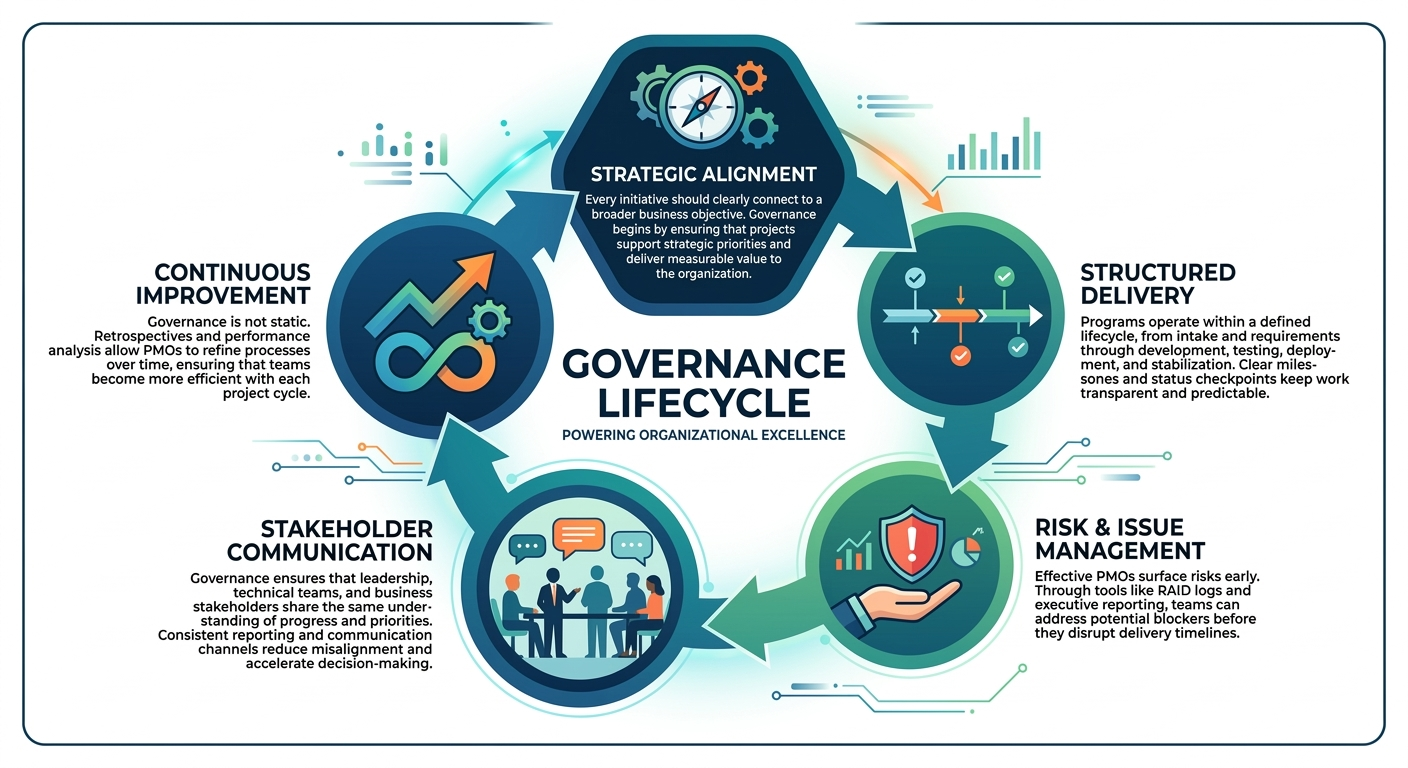
Successful programs require more than good ideas — they require structure. My approach to PMO governance focuses on creating clear processes, transparent communication, and accountability so teams can deliver meaningful outcomes.
In complex organizations, projects often involve multiple stakeholders, technologies, and priorities. Governance ensures initiatives stay aligned with business strategy while maintaining visibility into progress, risks, and decisions.
My philosophy blends structured program management with Agile delivery. The goal is simple: create enough structure to guide teams while leaving room for innovation and speed.
Governance Framework
Five core pillars
Every initiative must connect to a clear business objective. Governance ensures projects support organizational priorities and deliver measurable value.
Programs follow a defined lifecycle — intake, planning, development, testing, release, and stabilization — with clear milestones and checkpoints.
Risks are identified early and tracked through structured tools such as RAID logs, enabling teams to address challenges before they impact delivery.
Consistent reporting and communication ensure leadership, technical teams, and business stakeholders remain aligned on priorities and progress.
Retrospectives and performance reviews allow the PMO to refine processes and improve delivery over time.
Governance in Practice
I implement governance using tools and frameworks such as:
- Program lifecycle frameworks
- RACI accountability models
- RAID logs for risk tracking
- Executive dashboards and reporting
- Agile sprint planning and retrospectives
- Cross-functional stakeholder alignment
These systems provide visibility, accountability, and structure while enabling teams to execute effectively.